
Welcome!
Synthia Solace:
Vocals and Song Writer of Grief & Solace (GnS) Records!

My History:
“I don’t just make albums… I make sagas.”
Born in 2003 and raised all over Texas, I learned early what it means to survive without a safety net. Nurse, mom, hustler, songwriter — I’ve stocked shelves, tended bars, and sung to empty rooms. Through it all, I kept humming, writing, singing; because somebody has to put words to the things that hurt beautiful.
I’ve seen what disease does to a body 😠 and what heartbreak does to a soul 💔. I know too many people carrying grief like it’s just another outfit 🥀.
My music is for them — for you. If you’re going through it and don’t feel seen, I see you. And now I’m making you heard 🎶
My songs sound like confessions with reverb — the soundtrack to a meltdown in the bathroom at your cousin’s wedding 🍷 — or what you’d play on the drive home after pretending to be okay all night 😢
Whether I’m whisper-screaming, floating in falsetto, or singing like a siren, I’m not here to be industry‑palatable. I’m here to cut through. Grief & Solace isn’t just my label; it’s a promise: no matter how broken you feel, you’re still worthy of melody.
Some artists chase fame (low‑key I wouldn’t mind a little hype). I chase catharsis. I want truth that makes you flinch, and I want the girl on the bathroom floor to hear something that makes her sit up and say, “Wait…that’s me.”
Because it is. And I’m still here too.
Love & Hugs,
- Synthia
Synthia Solace:
Vocals and Song Writer of Grief & Solace (GnS) Records! An Expanded Background History:
My History:
Synopsis:
My earliest education wasn’t in a classroom; it was in the doorway at 6 a.m., watching my mom come home from a night shift in scrubs that smelled like coffee, sanitizer, and a kind of courage you can’t buy. She never handed me horror stories; she handed me the truth with edges softened, and adjusted just enough for a kid to carry, not enough to pretend the world was lighter than it is. She’d sit, shoes off, eyes ringed with the kind of tired that means you gave everything you had. “Some days are heavy,” she’d say. And some days, silence did the saying.
That silence? That was my first instrument: The pause between what hurts and what we admit out loud.
I’ll be sharing more articles about my music, the stories behind the songs, and the journey of building Griefwave & Cathedralcore. Subscribe if you’d like to walk these halls with me.
I learned early that protection isn’t the same as pretending. My mom didn’t shield me from reality; she modeled what to do with it: you keep showing up, you tell the truth, and you hold people who are hurting without turning them into spectacle. I didn’t fully grasp, have the understanding, nor the language for it back then, so I took the steps to develop a way, and that was by one lyric at a time. Words soon became melodies, melodies became little rooms, and those rooms became a house I call the Cathedral: a place where grief can take off its shoes and stop apologizing for how long it plans to stay.
If you’re new here, understand this: I don’t make background music for brand activations. I write sagas. Some of them are soft as a prayer; some of them bite with sass, but I try to make sure they’re always built for people who’ve sat in parked cars finishing the song because the chorus understood them better than their friends did. They’re for the ones who’ve carried diagnoses like secret passports, the ones who’ve loved to the point of losing themselves, the ones who learned way too young that laughter and lament aren’t only enemies, they’re roommates.
I grew up with grief as a neighbor, then a housemate, then a collaborator. Not the glamorous, cinematic kind the industry packages for playlists, but for the ordinary, stubborn kind: the ones that still need lunch, still have to clock in, still cracks a joke at the wrong time because that’s how it survives, where the only alternative is to just break down.
That’s the pulse under everything I make.
It’s why I sing about bodies and bills, hospital light and holy light, breakups and breakdowns and break-throughs. I don’t separate the sacred from the street; I give them the same mic.
Let me say it plainly so there’s no confusion later: I’m not here to cosplay “tragic” for clicks, and I’m not selling recycled hooks in newer outfits. While parts of the industry are busy sanding artists down to fit whatever trend drives another half-percent of ad spend, I’m over here adding rooms to the Cathedral; these are rooms with names, histories, altars, jokes, scars. I’ve got nothing against a crisp 808, but if the lyric doesn’t tell the truth, it’s just furniture in an empty apartment, and I DO NOT empty myself for furniture (I only empty myself for fajita lunch time specials! Kidding, Kidding).
The point of my work isn’t to make grief fashionable; it’s to make people feel seen. Because being seen changes posture, it changes choices, sometimes it even changes outcomes. When music says, “I sympathize with what that feels like,” the room gets air again. And yes, sometimes the song wears diamonds and laughs at itself on the way to the chorus. Satire is part of the medicine, but also so is swagger, and also so is prayer. I mix all three because life does, and I would even go so far as to say life demands it.
This introduction is the on-ramp: who I am, why this voice, and what you can expect here. On Substack, I’ll take the long road. I’ll talk about the albums as sagas, not products; about Griefwave as a genre that refuses to treat pain like a marketing angle; about why I think music can be both ambulance and architecture. I’ll write about the nights we laugh through tears and the mornings we put our feet on cold floors and decide, again, to stay.
If you came for a tidy origin story, well, I apologize in advance for subverting expectations because I won’t fake one. I came here the way most people do and struggle with: Through the side door, carrying too much, and just looking for the light switch for some sort of guidance, and the Cathedral is that switch for me, and please, if you need it, then I hope it can be one for you too.
Welcome, wipe your eyes, or let them flow because either way, the doors are open and we’re beginning.
1.) Who is Synthia Solace? The Trusted Background to Make These Songs:
You’ll see a thousand “artist bios” on the internet, and most of them read like they were written by someone’s PR intern after three Red Bulls. They stack words like “visionary” and “genre-bending” without ever answering the real question: why should I trust you to sing about the things that actually matter?
Because let’s be real honest: the industry is full of smoke and cosplay. Rick Ross spent years as a correctional officer, but somehow we’re supposed to buy him as the kingpin of a Miami coke empire? Drake raps about “started-from-the-bottom grit”, but his bottom was a Canadian teen soap opera set. Half the pop girls are handed tracks written by six men in a boardroom who couldn’t pick grief out of a lineup if you spotted them the coffin. And don’t even get me started on rappers who flash guns in videos, then get exposed for living in gated suburbs where the scariest thing is a Homeowners Association letter about their lawn.
That’s not artistry, that’s roleplay; and sure, roleplay sells – absolutely. But don’t ever confuse it with truth.
Which is why I want to get the “trusted” part of Synthia Solace out in the open right away and explain the why: why I deserve to bring you grief not as a gimmick, but as authority shaped through a different perspective.
I didn’t come into music through the clean doors of conservatories or industry pipelines. I came through the side door, shoes scuffed, carrying more grief than gear. My mother was a nurse, the kind who clocked out smelling like bleach and adrenaline, carrying entire human stories in the folds of her scrubs, sometimes stained heavy with the fluids no detergent could fully wash away… She didn’t sit me down for lectures on mortality, but kids know when the world is heavy even if no one names the weight. She taught me the world is fragile, not by telling me, but by walking through the door each morning alive but exhausted, with shadows in her eyes.
Some parents make it a habit to hide everything from their kids, but mine understood that pretending isn’t protection. She always gave me fragments of truth: a patient who fought harder than their body would allow, a family who found a way to laugh in a waiting room where laughter shouldn’t have belonged, and yet when it came, it was strength, it was medicine, and everyone present welcomed it like air.. She edited enough to keep me from being crushed, but she never dressed it up as something it wasn’t, and within that is its own kind of trust where she trusted me with reality, softened? Yes, but not censored, never fully censored.
What do you do with that weight when you’re young and wordless? Well, you find a language. Mine? My language was lyrics. At first, they were scribbles in notebooks, rhymes that didn’t always line up, choruses hummed under my breath. Some of my earliest “masterpieces” looked a little like this:
“Ung ung, school was being really mean,
why can’t I color my turkey green?
It’s my fav color and probably his too,
dats okay ’cause me and Gobbles are 2 cool 4 school.”
Okay, alright, I’ll admit (Grudgingly) it’s not EXACTLY Shakespeare lol, but it was my first proof that even nonsense can be survival if you give it rhythm. The silly lines gave me practice, and practice gave me permission to turn heavier truths into music when the time came.. But those words became melodies, the melodies became rooms, and those rooms were layered together and became a house I call: “The Cathedral”. A place where grief doesn’t have to apologize for how long it plans to stay.
This is the “authority” behind Synthia Solace…Not degrees, not industry cosigns, but actual lived experiences, witnessed by inheritance. A daughter of a nurse who carried secondhand stories of fragility like heirlooms. A young woman who chose music as the only tool sharp enough to carve those heirlooms into something audible, something useful, something that could hold someone else up when they were slipping.
When I sing about medical conditions or loss, it isn’t because I skimmed Google or scavenged pain for “content.” I start with what I’ve lived and witnessed, then I build on it with real research: medical texts, firsthand stories, documentation. I stitch the cold facts to the warm pulse of my own experience so the song carries truth on every level. My responsibility isn’t to play expert, it’s to actually respect the people living it, to make sure that when someone with that diagnosis listens, they don’t feel flattened into a metaphor but actually recognized. These realities were already in my kitchen air, in the silence of my childhood, in the notebooks I filled before I had language for them. They lived in my body before I could name them. That’s why I don’t flinch when I write about grief, and why I refuse to sand it down into Instagram poetry or “sad girl autumn” playlists. I don’t romanticize pain; I recognize it, and there’s IS a difference.
That’s also why people trust me: Because when I say I know what it’s like to carry something invisible, to shoulder a diagnosis like a secret passport, or to sit in a car and finish a song because the chorus understands you better than your friends do… I’m not performing sympathy; I’ve lived beside it my whole life.
So in short: If I’m going to write your story, I’ll damn well do my homework first!
The industry loves to package “authenticity” like it’s just another marketing bullet point. They want you to believe truth is a costume you can buy off the rack; maybe even paired with a nose job, a rented car, or yes, the infamous Brazilian butt lift (mmhmm, I said it!) for the music video. Meanwhile, I don’t have to cosplay ‘honesty’, I’ve had it on me since before I could spell. My mom walked through the door at 6 a.m. and handed me the kind of reality you can’t fake. I turned it into songs because I had to, not because I thought it might chart.
So yes, this is who I am: Synthia Solace. Trusted not because I say so, but because I’ve lived it, breathed it, researched it, poured myself into the sympathy of it, and carried it into every lyric I write. I’m not an accessory to grief; I’m its translator. And if you’ve ever wondered whether music can really make you feel seen, I’m here to tell you…Well, it can. Because it did for me, and I intend to return the favor.
2.) Building the Cathedral: A Sonic Home for Grief, the Things I’ve Learned, and the Direction I Want to Go:
The Cathedral didn’t arrive fully formed, carved out of marble like some Renaissance fantasy (Though I truly wish it had every time I had to fill out the Yoast for SEO purposes lol). It started messy, and truth be told, at times it looked less and less like a Cathedral and more like a carnival funhouse; mirrors everywhere, corridors leading into corners, a thousand doors with no map.
I was (and still am) so hungry to say everything all at once that I almost said nothing at all. Medical grief, relationships, heartbreak, demons, satire, faith, collapse…every song idea lit up like a neon sign in my head, and I tried to chase them all down. What I ended up with was a maze: colorful? Yes, but confusing. I could feel myself scattering, diluting the very reason I started writing in the first place.
That’s the part that stung most: that when I sat down, truly reflected, and truly admitted to myself that I wasn’t building a Cathedral; I was building a midway attraction, and grief, the very thing that I wanted to explore and was supposed to honor, translate, and carry, was actually just getting lost in the mirrors.
So here’s me being honest, professor glasses and all: I don’t want to be the artist who tries to build every hall at once. I want to be the one who commits to the core mission: Grief. Not just the medical albums, and don’t get me wrong, those definitely matter deeply, and not just the heartbreak anthems, and again, those belong too. But grief is the throughline, whether it’s losing a loved one, losing yourself, losing your faith, or even losing (what most of us seem to be experiencing more and more lately)time.
That doesn’t mean I’m abandoning the other flavors. You’ll still hear songs about demons, about missing God, about absurd satire dressed in diamonds. They have their place, but they’re side chapels, not the altar. Supporting arches, not the main dome. The Cathedral needs a central nave, and for me, that nave is grief. That’s the story I was always meant to tell.
Looking back, I can laugh at myself; I thought I was designing a Cathedral, but I was really building a mall food court with better sound design (Cause it had Synthia Solace on deck 24/7! hehe). Every stall yelling for attention: “Here’s your cosmic satire! Here’s your gothic heartbreak! Here’s your demon diss track! Step right up, pick your flavor!” It was ambitious, sure, but not sustainable. If I kept going that way, listeners would’ve needed a GPS and a Xanax just to make sense of my discography.
So I’m pulling it back and I’m going to be streamlining, concentrating, and Learning from my own overreach. Because, just like my journey in the music industry, I want to grow as a person too. I don’t need to fill every wall with frescoes; I need to leave space for the light to come in.
This is my humility ritual: admitting I tried to do too much, too fast, and almost turned a sanctuary into a sideshow. It’s not failure, it’s calibration, and honestly? I think the Cathedral deserves that…I think you… deserve that.
From here forward, when I sit down to write, my first question won’t be “What can I add?” but “What truly belongs here?” Because grief deserves clarity, it deserves more than a funhouse. It deserves a home.
3.) Why “Griefwave” (and Its Sister, Cathedralcore) Deserve Their Own Tags:
“B-But Synthia!… don’t we already have that tag?! It’s called ‘Emo.’”
To which I say: NAY!
Emo had its moment, the eyeliner, warped Vans, lyrics about your stepdad not understanding you, now don’t get me wrong, there’s definitely value in adolescent angst, but Griefwave is NOT emo. Emo was about outbursts; Griefwave is about endurance. ‘Emo’ screams in the moment, while Griefwave sits with the silence that comes after. ‘Emo’ was Friday night eyeliner runs; Griefwave is what happens on a Monday morning when you’re still alive, still hurting, and still going to work because rent doesn’t care if you’re sad.
Griefwave deserves its own tag because grief is not a niche; hell, it even comes with five stages that eventually expanded into seven. In fact, grief is a universal constant; everyone loses something in some form: a person, a body, a self, a dream. Some losses get funerals, some don’t. Some grief is loud and visible, others are private and quiet, but I believe all grief deserves soundtracks. And while we’re being honest, let’s call it out: if Spotify can invent chillwave or shoegaze (and seriously, I still don’t know what shoegaze actually is, but it’s an option I can pick?!) just to sell coffee shop playlists, then Griefwave damn well deserves recognition as the sound of survival. But Griefwave doesn’t stand alone. It has a sister: Cathedralcore.
Where Griefwave is the blood, then Cathedralcore is the bone. Griefwave is the current of emotion that flows through the songs, and Cathedralcore is the architecture that holds them. It’s the understanding that my albums aren’t just collections of singles; in fact, they’re actually sagas. They’re not designed to sit comfortably on algorithmic playlists; they’re designed to be walked through like halls. Some rooms are heavy with medical grief, some shimmer with satire, and some echo with prayer, but they all belong under one roof, and that’s: Cathedralcore.
Please let me be clear: this isn’t branding for branding’s sake. This is me fighting for language that does justice to the work. The industry will try to flatten everything into the same categories because it’s easier to sell things like: “Sad girl autumn,” “breakup bops,” “emo revival.” It is cute. It is marketable and it’s definitely shallow; they create cute hashtags, sure, but hashtags don’t build hymns… but I’m not here for shallow, I’m here for depth, for sagas, for grief that wears its whole wardrobe and that wardrobe is: gowns, scrubs, sweatpants, and sometimes ashes.
Cathedralcore says: the music is not just a vibe, it’s a structure. It’s not just a tracklist, it’s a building. You don’t shuffle a Cathedral; you enter, you walk, and you stay awhile…
So yes, Griefwave and Cathedralcore deserve their titles. Emo just wishes it had a skeleton this divine. Chillwave can keep your lattes.
I’m over here building monuments! *Sparkle*

4.) Satire, Swagger, and the Journey of Sagas:
By now you’ve probably noticed something: not every song I make sounds like a hospital ward, and not every lyric is written like a eulogy. Some of them laugh, some of them flirt, and some of them are so bratty they might make you roll your eyes, and that’s intentional. Because grief doesn’t just sit in silence; it shapeshifts, and sometimes the only way to carry the weight is to dress it up in rhinestones, spray some dior, and mock it.
I’ve always believed satire and humor are medicine; in fact, maybe the movie Patch Adams (starring the late and absolutely great Robin Williams) influenced me more than I realized. Humor is healing, just with a sharper flavoring. So when I write a track dripping in diamonds, brattiness, and cattiness, it’s not because I’ve forgotten about grief; It’s because sometimes the only way to survive is to laugh at how absurd it all is. A motto I’ve carried my whole life is this: “I laugh because the only other alternative is to cry.” And it still holds true. Swagger becomes survival, Brattiness becomes armor, and Sarcasm is the bandage you slap on before the wound has even begun to close.
That’s why I don’t write albums as collections of singles. Singles are like snacks, and I write sagas, and sagas need variety. A saga has its funerals, yes, but it also has its tavern scenes, its comic relief, its battles, its betrayals, its small tender moments where a character brushes their hand across the stained glass and remembers why they entered the Cathedral in the first place. A saga gives you an arc, not just a playlist.
If you want ten algorithm-safe singles, I’m not your artist. Spotify has “Sad Girl Autumn” for that. If you want a journey with laughter that makes no sense in waiting rooms, with satire sharp enough to sting, with swagger that looks like defiance but feels like survival, well then you’re in the right place ^_^.
That’s what makes a Cathedral album different. It isn’t background noise, it isn’t just “songs to cry to.” It’s architecture. Every track is a room; Some rooms echo with prayer, and some shimmer with absurd satire; Some are bratty, petty, poison-dipped lipstick anthems, but you can’t experience them in isolation; you need to walk the whole hall.
So when I call my music sagas, I truly mean it. Satire and swagger aren’t detours; they’re part of the pilgrimage. You don’t get to the altar without walking through the chaos first.

5.) The Power of Being Seen in Music:
When I strip it all down: The satire, the swagger, the architecture, the sagas; it always comes back to this simple but often ignored philosophy of just being seen. That’s the whole engine under the hood of Griefwave and Cathedralcore.
Because as “Patch Adams” so beautifully shows us, being seen changes things. It changes posture. It changes choices. It changes survival. I’d even go so far as to say it changes the very essence of a person. I’ve seen it in myself. I’ve seen it in strangers. Anecdotal evidence? A boy with Juvenile Arthritis once made a TikTok singing my song word for word in lion makeup. That video didn’t go viral; it didn’t need to. It was proof that one song can make one person feel recognized. And for me, as well as that child, that was enough to suspend the world for a second and just… be. If a track never charts but gives someone the strength to whisper, “I can do this,” then I haven’t just done my job…I’ve succeeded in my mission.
That’s why I don’t measure success in playlists or algorithms. The industry can keep its hashtags and hollow categories. “Sad girl autumn.” “Breakup bops.” “Emo revival.” Cute, marketable, but ultimately shallow. Because, at the end of the day, Hashtags don’t build hymns. What I want is depth. Songs as sagas. Albums as Cathedrals. Music that makes you feel like you’ve stepped into a room built specifically for your story, where the walls don’t ask you to apologize for how much you’re carrying…they remind you that you’re stronger than what you’re facing.
That’s what Griefwave is. That’s what Cathedralcore is. They’re not branding gimmicks; they’re languages. One is the current, the other is the structure. Together, they give grief, whether medical, relational, or spiritual, a home that doesn’t vanish when the playlist ends.
And here’s my promise to you: I will keep doing my homework. I’ll keep researching, listening, and weaving the cold facts with lived experience until the songs are accurate enough to honor the people they represent. Because grief is too important to fake, and too heavy to flatten into a trend.
Also, here’s my invitation: this isn’t just me on a stage while you listen. The Cathedral is meant to be walked through together. If you’re experiencing something I haven’t explored yet, or if there’s a story you’d like me to carry into song, I’m open.
For personal, human connection: synthiaandsolace@gmail.com
For more formal concepts, business pitches, or structured ideas: gnsrecrods@synthiasolace.com
Send me a concept, a memory, a glimpse of what you’ve been through. Whether it’s medical, personal, or simply a grief that refuses to be named, I’m here. I’ll read it, research it, and do the work to understand. Because that’s what Griefwave demands: accuracy, empathy, and recognition.
I like to say “I’m here to hear” and yes, I know it sounds like a clever wordplay, but I mean it seriously and sincerely… I’m here to listen.
So welcome to the Cathedral. Wipe your eyes, or let them flow, because either way, the doors are open. And this? This is only the beginning.
-With Love,
Synthia Solace
My Discography (So Far 🥰)
Cassiopeia: Love Me
- I’m Insta Famous UwU
- Pet Me Love Me
- That’s Showbiz
- Boss Bitch Politics
- Tellin Me What I Already Know
- Put It On My Wishlist
- Who the Fuck Are These Hens
- One Last Dance
- I fell in love with love
Slice Of Life: Vol 1.
(Work, Wine, Repeat)
- This Mondays Problem
- Tempt Me Twice
- I’m Up, I Guess
- Choose Your Kitty (Adoption Day)
- I’m Manifestin’ (WhiteBoard)
- Just Get It Over With (It’s Not That Bad)
- Half Verted
- Gaslight
Red Wines & Rewinds
- Cleopatra
- Sacred (50% Off)
- This Wasn’t Freedom
- Define Lost
- Chickens Always Cluckin
- The Last Unicorn
- What You Bring To The Table
- Fairy Godmother
- House Not Trophy
- Peace Looks Good On You.
The Curious Case Of "Chibi-Synthia" & Charm 🥰 🐔

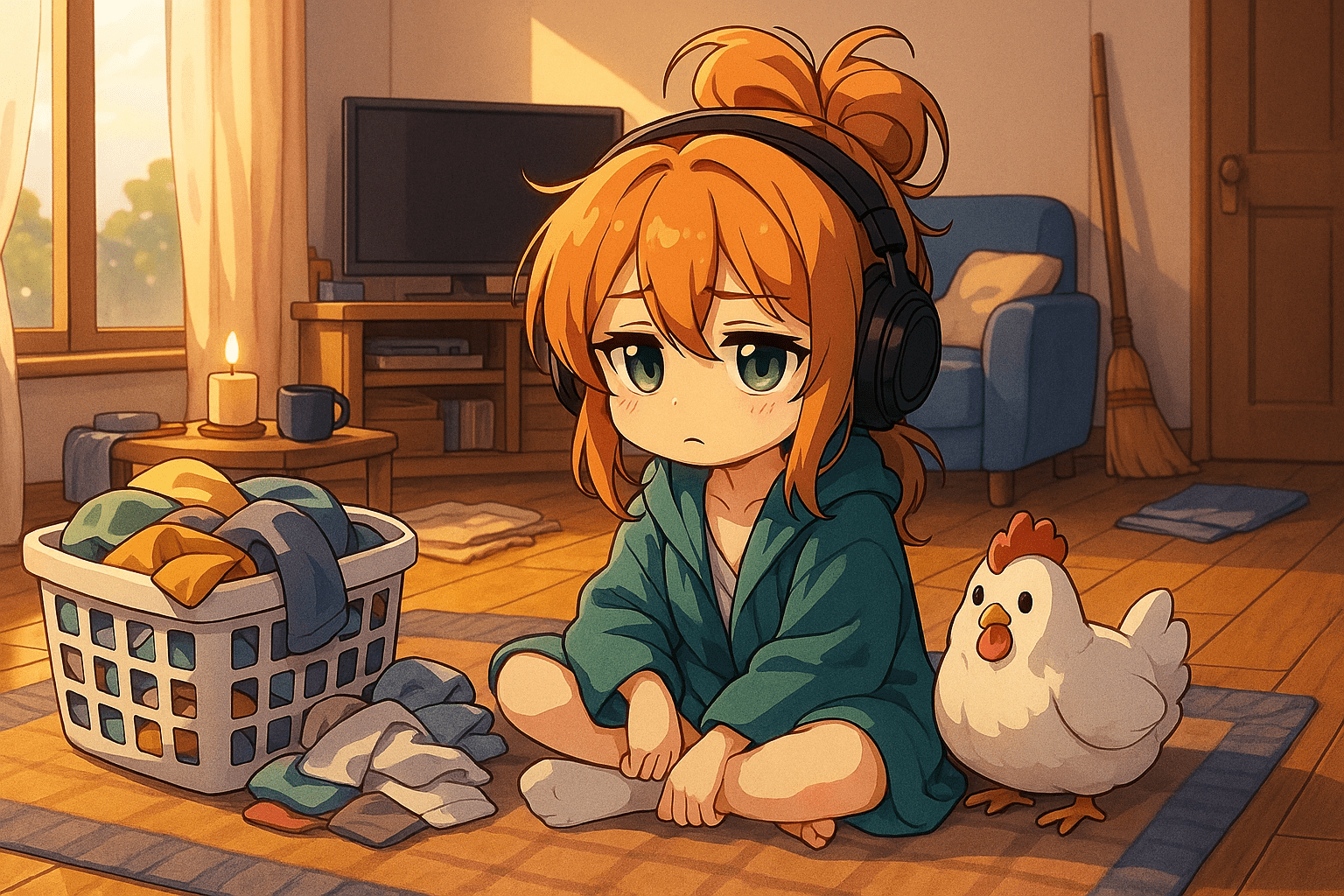
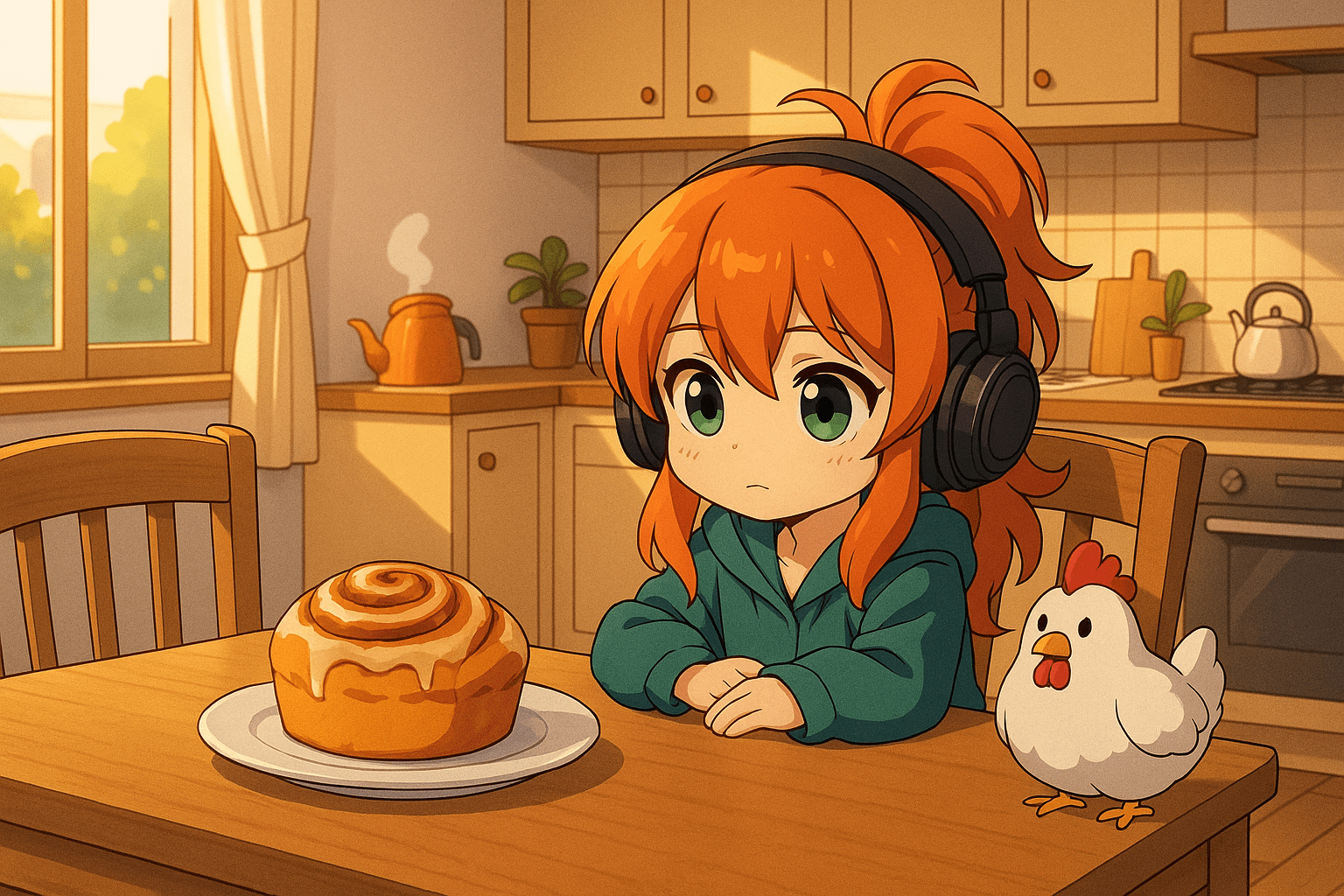
I know, it’s ironic…
A shy music artist 😔
But that’s the truth of it…
I’ve always been someone who feels things loudly and exists quietly. I don’t naturally take up space. I don’t perform confidence on command, and I sit with emotions first. I watch, I listen, I process, and then eventually I use that energy to do what I do best…I create.
So when it came time to give my music a visual world, I didn’t want something loud or intimidating or polished to death. I wanted something honest, Something safe, Something that could hold big feelings without demanding attention.
That’s where Chibi-Synthia came from.
Chibi is permission.
It’s a softness without weakness.
It’s emotion without armor.
By shrinking myself into a small, expressive version, I found a way to say things I couldn’t always say out loud (I admittedly stole this idea, though not new, but from Tech N9ne and how he always put on a mask before the stage). Chibi-Synthia lets me set the emotional temperature of a song before you even hear it, so whether that’s cozy, unhinged, grieving, playful, furious, or quietly exhausted, she doesn’t have to pretend; Chibi-Synthia just is.
Through her, I can show you what the music feels like, not just what it’s trying to prove.
Then there’s Charm! 🐔
Charm isn’t a metaphor. She’s real. (In fact, she’s pecking my back door right now, making me think neighbors are here, but I know it’s her demanding more grapes! lol)
She was my very first chicken out on the farm: a beautiful white Plymouth Rock with the personality of someone who absolutely knows everything that’s going on and cannot wait to tell you about it. The moment she sees me, she runs full sprint, wings slightly out, Bwakking like the world is ending!
She has opinions (Though sometimes we don’t agree on all of them 🤭).
Charm reports barn gossip like it’s breaking news. Who stepped where? Who looked suspicious? Who is absolutely not to be trusted today? She follows me around, supervises everything I do, and makes it very clear when I’m late to chores or emotionally unavailable 😂.
So, of course, she became part of the world.
Charm represents: Curiosity, Presence. The small, living reminders that keep you grounded when everything else feels abstract or overwhelming. She’s proof that even in grief, life keeps nudging you and asking to be noticed, asking to be cared for, asking you to laugh at least once.
Together, Chibi-Synthia and Charm create a bridge between music and feeling.
They turn heavy themes into something approachable.
They let grief sit beside humor.
They make room for tenderness without shame.
This isn’t branding but a translation.
It’s how I say, “I’m here too,” and how I invite you to sit with me with no pressure, and no performance, just stories, songs, and a curious little chicken who insists on being part of all of it.
Welcome to our corner of the Cathedral!
Thank you for being here.
Love, Synthia Solace.
Frequency Asked Question Time! (FAQ)
What is Griefwave?
Griefwave is a sound and approach created by Synthia Solace (Me ^_^) a soft, hypnotic melodies paired with emotionally honest lyrics. It’s welcoming and cozy on purpose, like a blanket over heavy truth. It also overlaps with Cathedralcore: a little sacred, a little weird, a little “come sit with me,” where pain isn’t hidden just, ya know…held.
How often do you release music?
It truly depends on the project. Major albums (like the medical projects) can take a few months because they’re heavy and structured. But I try to stay consistent with visuals. At minimum, I aim to drop a chibi clip once a week with a hook from a song, so the world stays alive even when the big projects are cooking.
Is Synthia Solace an independent artist?
Sure Am! I’m fully independent and release music through my own label, Grief & Solace Records.
Who is Charm?
Charm is my real-life chicken! my buddy! and she’s become part of Synthia’s world. She shows up in the visuals as a grounding presence: domestic calm, absurd joy, and that “you’re not alone” energy when everything else feels loud.
Is it silly to include my chicken in everything? Probably. Is it fun tho? Definitively!
Why the chibi / animated visual style?
The Mini-Synthia style lets me explore heavy themes in a softer, more approachable way. It’s intentional contrast to serious emotions in comforting visuals. Also, honestly? It helps set the mood because I’m broke and don’t have production-level budgets so chibi visuals let me build a whole emotional universe that matches what I’m trying to say musically.
What is Slice of Life and Slice of Vice?
Slice of Life is cozy, everyday music think: work, burnout, pets, chores, mood swings, the small stuff we all live inside.
Slice of Vice is for when you’re “being good”… but you need the cinnamon roll anyway. It’s fun energy, weekend-ready, bratty relief, and the little indulgent spirals that make life feel alive.
What genres do you make?
It depends on the album and the saga I’m building. You’ll hear Glam Trap, Pop, and lofi-cozy vibes a lot, but I’m not locked to one lane. The genre follows the emotion.
Why do you make medical songs?
Medical songs are what started everything: The grief part especially. A lot of people go through conditions and struggles that never get understood or even heard out loud. I make those projects so people feel seen, empathized with, and less alone. Sometimes the most healing thing is realizing somebody else actually understands what you’re carrying.
Moved by the music? Help us keep building the sound of survival.
Every song helps someone feel seen. Every donation keeps the Cathedral alive…creating music for the unheard, the hurting, and the forgotten.
Need To Find Me? You Can Find Me Everywhere!
Wanna Explore?





Grief & Solace Records
Talk to Me (Preferably Nicely)
Or yell into the void, I’ll probably still hear it.😇
Wanna tell me something? Send a little love? Maybe confess your sins or your Spotify queue?
(Please don’t send hate 🥺 my emotional support chicken can’t handle that again.)
Whether it’s feedback, a hello from your corner of grief, or you just wanna say
“Yo, Synthia, your song wrecked me..,thanks?”…I’m here for it.
Messages go straight to the Cathedral inbox where the goblins, oracles, and I actually read them.
Let’s talk, hum, scream, or cry, however you communicate best.
The mic’s open.